- NMNH Home ›
- Education ›
- Classroom Resources ›
- Web-based Student Activities
Web-based Student Activities
These student activities represent the diversity of science conducted at the Museum and encourage the development of science inquiry and critical thinking skills. Activities range from elementary through high school. They can be incorporated into classroom lessons or units.
Activity Groups:
Formation and Evolution of the Earth and Solar System
This Dynamic Planet
An interactive map lets you explore 1,500 volcanoes, 44,000 earthquakes, 170 impact craters, and all the tectonic plates that make up the earth's crust. If a volcano erupts, or the crust trembles, you can find the event on this map. The back of the map would make a great poster for the classroom.
Geologic
Time
Travel through 4.6 billion years of life's history on Earth and get a sense
of the interplay between Earth and life processes.
Human Culture and Diversity
Human Evolution
in 3D
Students can examine 3D renderings of skulls from humans and their biological
ancestors at this site developed by the University of California at Santa Barbara.
Nutrients
for Humanity
In the Humanity Against Hunger web module, students become volunteers to help
solve the severe food shortage faced in Africa. Through the interactive experience,
students learn how nitrogen, potassium and phosphorous deficiencies can stunt
plant growth in different ways. They also learn how replenishing the land with
fertilizer can help farmers achieve higher yields of crops to feed more.
Kids
Web Team
This program brings facts about plant nutrients (N, P and K) to life through
a series of advanced interactive activities and a game show. Ideal for science
classes grades 5 — 8, the program keeps students' attention with fast-paced
movement and easy-to-understand material.
It’s
Elementary
If students think soil science is boring, they should try this! The program
contains three online games, lessons and facts to teach your students, grades
K through 5, the importance of N, P and K. Best of all, the fun, comic format
is guaranteed to capture both their attention and imagination.
Discovering and Understanding Life's Diversity
Coral
Reef Interactive
This web-based tool is designed for students to take on the persona of a local
resident, a hotel manager, or a tourist. In these roles, they weigh the interdependence
between the economic and social impact of human activity and the biological
needs of a coral reef and its conservation.
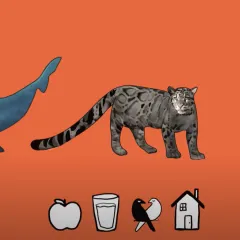
North American Mammals
There is a web page for every species on the continent with great
images of mammals, audio recordings, range maps, scientific illustrations, a glossary, and an interactive map that lets students create field guides for anywhere in Canada, the U.S.A. and Mexico. Mammals are searchable by location, by name, and family tree. Special information on conservation of endangered species is also provided.
Mammal Family Reunion Designed for ages 11 and up, the Mammal Family Reunion interactive website allows students to explore questions about mammals.
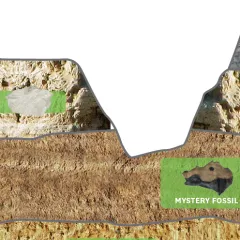
Life of a Vertebrate
Fossil
In this interactive, students follow a field team's experience as they discover,
excavate, transport, study, and display a vertebrate fossil.
Virtual
Dinosaur Exhibit
In this online exhibit, students can explore 3D models of specimens from the
Museum’s collections and learn more about how fossils are discovered,
unearthed, and preserved.
Virtual Dinosaur Dig In this interactive simulation, students can find and excavate a specimen and learn about its anatomy, where it lived, what it ate, and how large it was. They can also see a recreation of what the specimen might have looked like with skin and muscle tissue.
Tree of Life Interactive The Tree of Life is an interactive phylogeny that represents the evolutionary history of vertebrates. Students can see at which different species evolved in history and learn about species that exemplify important branches of the vertebrate evolutionary tree.
Expedition
to Galapagos
The Museum produced the 3D IMAX Film Galapagos, starring fishes curator Carole
Baldwin. Students can explore the film’s website, including new species
found in the Galapagos, a Q&A with Carole, and her personal journal and
photo log.
Collections Database
Students can search the database to conduct virtual research on the Museum’s
collections to make their own comparisons, using information and photos of
the specimens in the collections.
[ TOP ]